
Choosing how to build your company website is not a cosmetic decision.
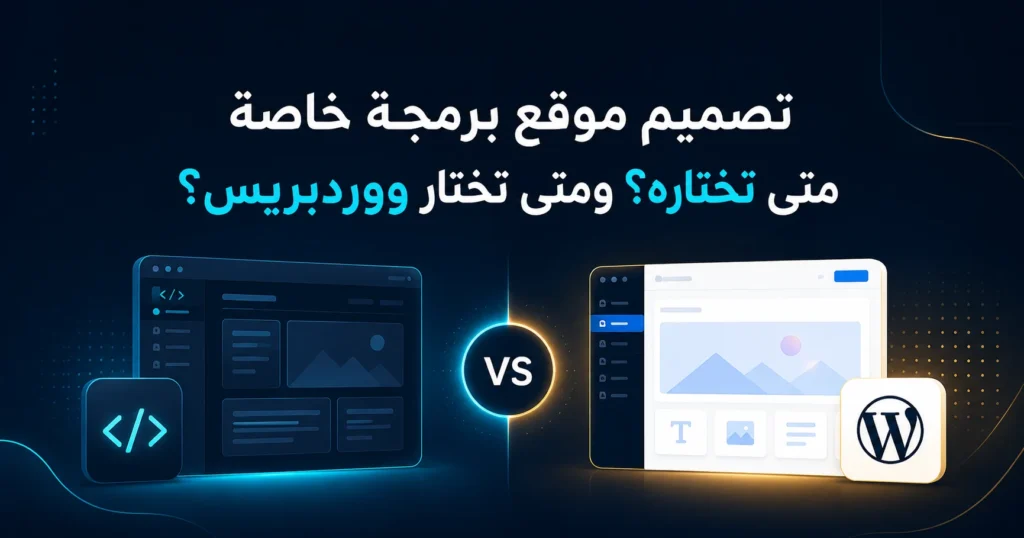
The question goes far beyond a simple choice like: should we use a ready-made WordPress theme, or should we build a custom WordPress website from scratch?
The choice can affect site speed, ease of management, design flexibility, scalability, and how visitors experience your brand. A ready-made theme can be suitable in many cases, while a custom build may be worth considering when the project needs more control over structure, content management, or dependencies.
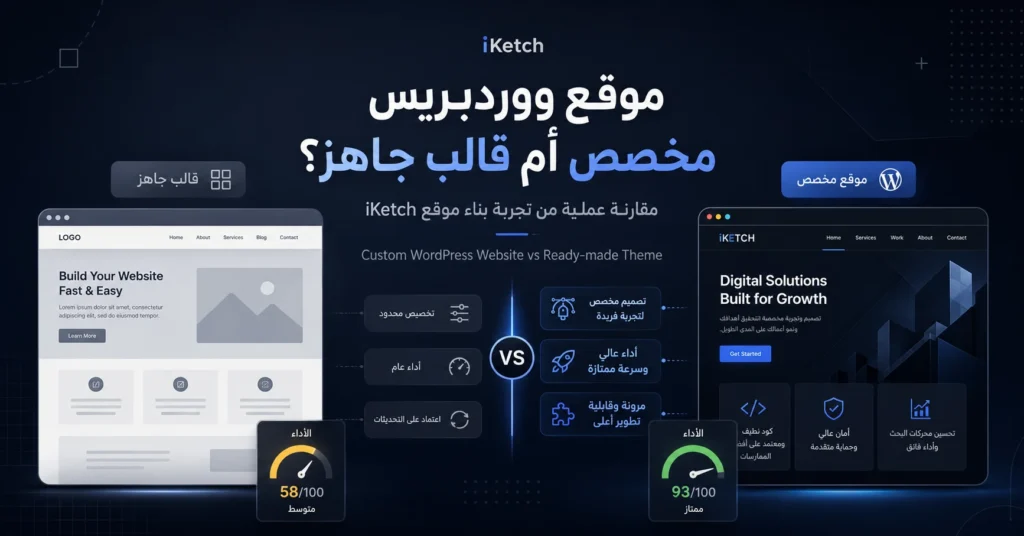
In this article, we offer a practical comparison between a custom WordPress website and a ready-made theme. This will not be a purely theoretical comparison. We will use the iKetch website build as a real example to show why we chose to build a custom WordPress theme instead of relying on a ready-made theme.
What does a ready-made WordPress theme mean?
A ready-made WordPress theme is a theme that you purchase or download, then modify to fit your website. It usually comes with built-in designs, demo pages, many settings, and integration with page builders such as Elementor, WPBakery, or others.
This type of theme helps you launch faster, but in return you work within the limits of the theme. You can adjust colors, images, fonts, and some layouts, but when it comes to performance details, user experience, or content management logic, the limitations begin to appear.
What does a custom WordPress website mean?
A custom WordPress website is designed and developed based on the actual needs of the company. Instead of relying on a ready-made theme full of unused features, a custom theme is built to include only what the website really needs.
A custom build does not automatically make management harder. Its day-to-day usability depends on how the editing experience is planned. The point is not to write more code, but to use an implementation that fits the project’s goals and the team’s workflow.
Comparison: custom WordPress website vs. ready-made theme
| Comparison Point | Ready-Made WordPress Theme | Custom WordPress Website |
|---|---|---|
| Launch speed | Faster at the beginning | Needs more planning and implementation time |
| Initial cost | Usually lower | Usually higher |
| Design | Limited by the theme structure | Built around the company identity |
| Performance | Affected by extra files and plugins | Can be controlled from the start |
| Ease of management | Easy for standard tasks | Easy when the admin experience is built properly |
| Plugins | Often relies on many plugins | Can reduce plugins and move functions into the theme |
| Scalability | Can become difficult over time | Better for long-term projects |
| Technical SEO | Depends on theme and plugin quality | Can be built into the site structure from the start |
| Security | Affected by plugin count and update complexity | Less complex when external plugin reliance is reduced |
| User experience | Limited by theme capabilities | Can be designed around real audience behavior |
This comparison does not mean a ready-made theme is always a bad choice. It simply shows that each option has its place. The problem begins when a company chooses a ready-made theme for a project that actually needs a custom system, or chooses a custom build for a very simple website that does not need it.
When is a ready-made theme the right choice?
A ready-made theme is suitable if your goal is to launch a simple website quickly. It may be appropriate in these situations:
- A startup company with a limited budget
- A simple company profile website
- A pilot project still in testing
- A website that does not rely heavily on Google traffic
- A website that does not need a highly distinctive design
- A company that simply wants to establish a quick online presence
- A project that will not need major expansion soon
In these cases, a ready-made theme can do the job, provided that you choose a lightweight theme and avoid overloading the website with unnecessary plugins.
The problem is not always the theme itself. The problem is often how it is used. Many websites start with a ready-made theme, then add a page builder, then speed plugins, then SEO plugins, then custom field plugins, then security plugins, then translation plugins, and then more plugins for every small detail. After a while, the website becomes heavy and difficult to maintain.
When does your company need a custom WordPress website?
You need a custom WordPress website when the website becomes an important part of your company image and sales process, not just a digital business card.
A custom website becomes more suitable when you need:
- A design that reflects your company identity accurately
- Strong performance on mobile and desktop
- A user experience designed around your audience
- Flexible content management inside WordPress
- Service pages built for SEO
- A scalable portfolio system
- Dynamic testimonials
- Manageable FAQ sections
- Reduced reliance on plugins
- Lightweight code that is easier to extend later
- A website built to grow rather than one that needs rebuilding after a few months
The more important your website is in the client decision-making process, the more important custom development becomes. A client visiting a web design agency, consultancy, tech company, specialist clinic, or B2B firm does not see the website as a set of pages only. They see it as evidence of the company’s quality. If the website is slow, cluttered, or looks like dozens of other websites, you lose part of that trust before the client even gets in touch.
Why is a beautiful look alone not enough?
Many ready-made themes look attractive in the demo version, but once real content is added, the result changes. Images are not identical. Text length changes. Sections no longer fit the service. Arabic or multilingual layouts need different treatment. Pages become longer and heavier. That is when the real problems begin.
Good design is not only about appearance. Good design should support the message, guide the user, and make the decision to contact you easier. A company website does not need to be full of effects. It needs to be clear, fast, persuasive, and easy to use.
The iKetch experience: why did we choose a custom WordPress theme?
At iKetch, we had two choices. The first was to use a ready-made theme and modify it. The second was to build a custom WordPress theme that matched how we present our services, portfolio, articles, and overall client experience.
We chose the second option. Not because a ready-made theme never works, but because we needed a website that reflected how we work. We provide website design and development services for companies, so it would not make sense for our own website to rely on a heavy, generic theme or a repeated design pattern.
The goal was clear:
- Build a custom interface that reflects the iKetch brand
- Consider performance requirements during planning and implementation
- Reduce plugin dependence
- Create scalable service pages
- Keep content management easy inside WordPress
- Support articles and SEO in a structured way
- Build dynamic sections for portfolio items and testimonials
- Maintain a clear mobile experience
- Prepare the website for long-term growth
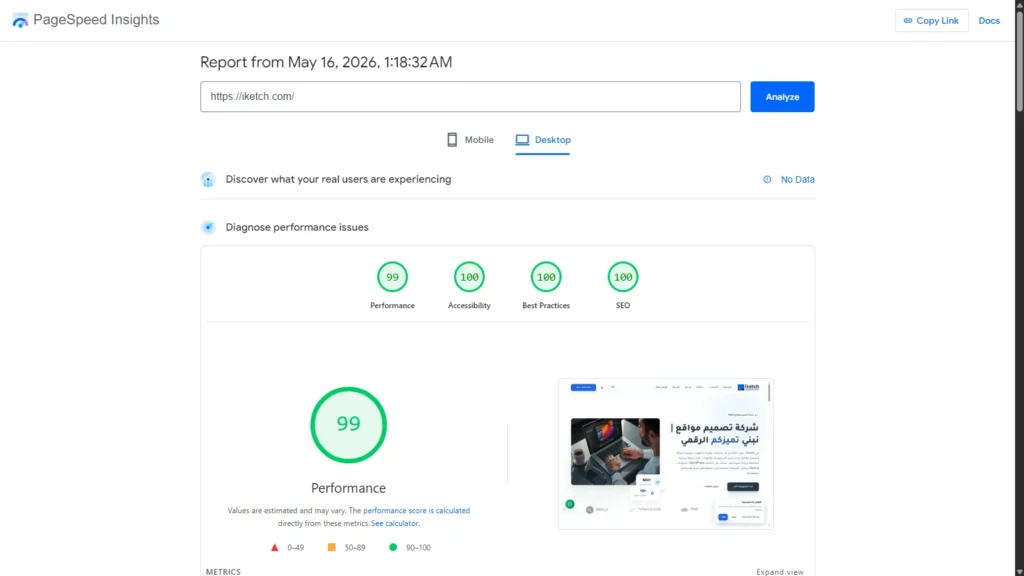
The first challenge: performance and site speed
Speed was not a bonus feature. It was part of the project foundation. A company website may look beautiful, but it does not achieve its goal if it is slow, especially on mobile.
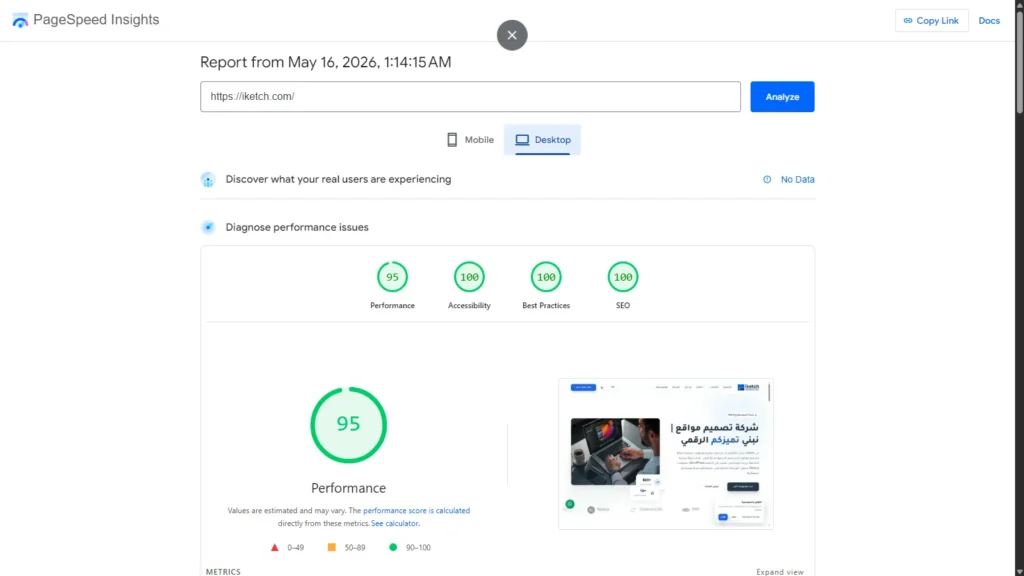
That is why building a custom theme gave us the chance to control every part that affects performance. Instead of loading many files from a ready-made theme, we built only what the website needed. Instead of using many plugins for small tasks, some functions were built directly into the theme. Instead of relying on patchwork fixes after launch, performance was considered from the design and development stage.
PageSpeed Insights can help review technical signals, but it is only one input alongside real-device testing, content weight, and the project’s actual user needs.
The second challenge: reducing plugin dependence
Plugins are useful in WordPress, but too many of them become a problem. Every plugin can add CSS and JavaScript files. Every plugin needs updates. Every plugin can conflict with another one. Every plugin can open the door to future performance or security issues.
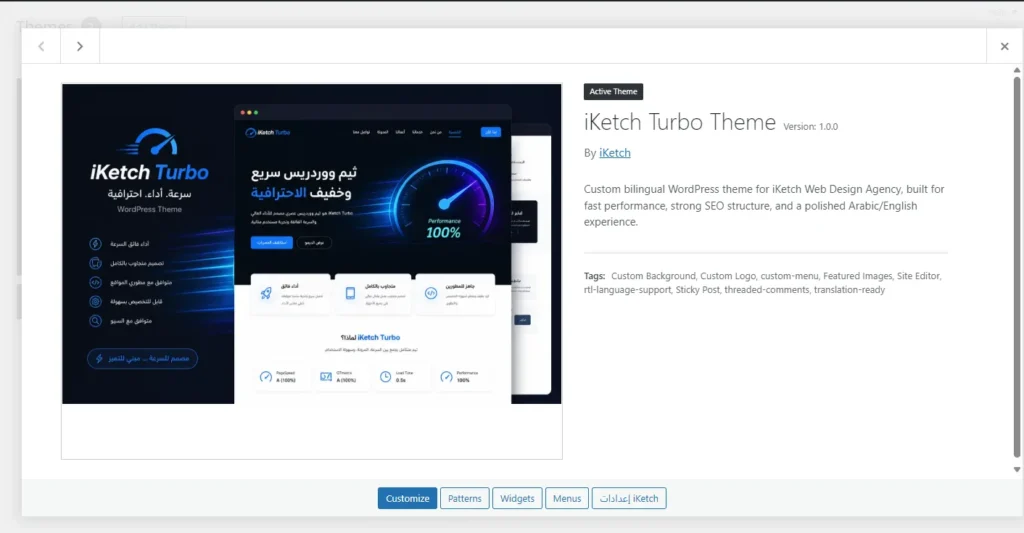
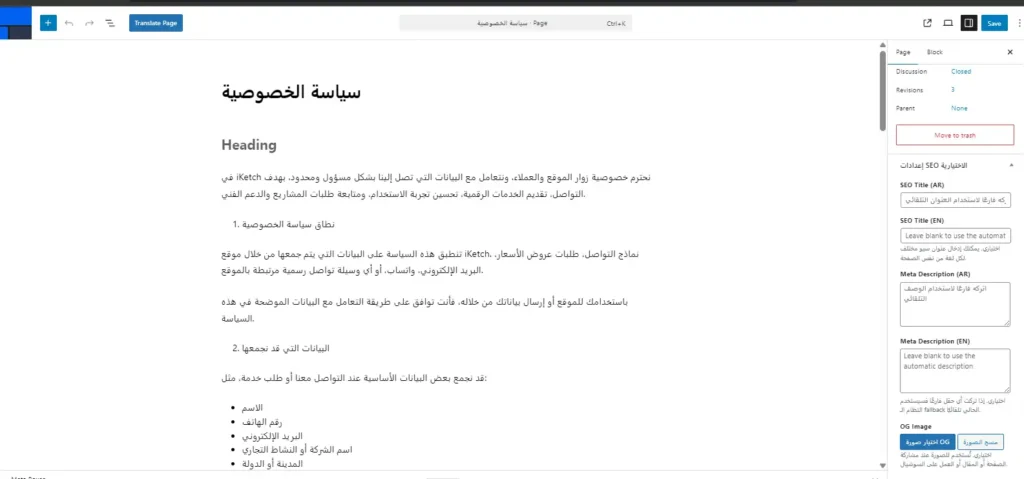
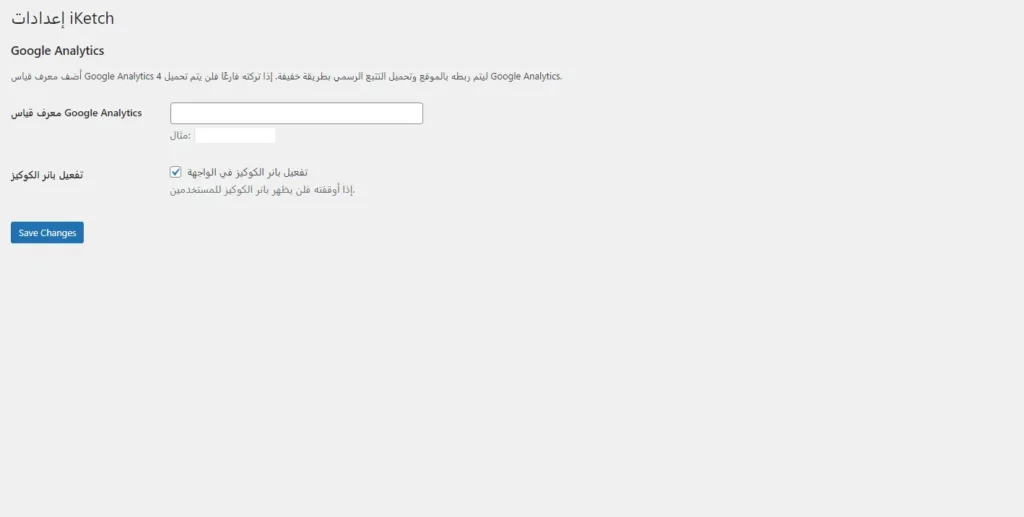
On the iKetch website, the goal was to use plugins only when necessary. But functions tied to the website structure itself were better placed inside the custom theme.
Examples included:
- Custom SEO settings for specific elements
- Service page organization
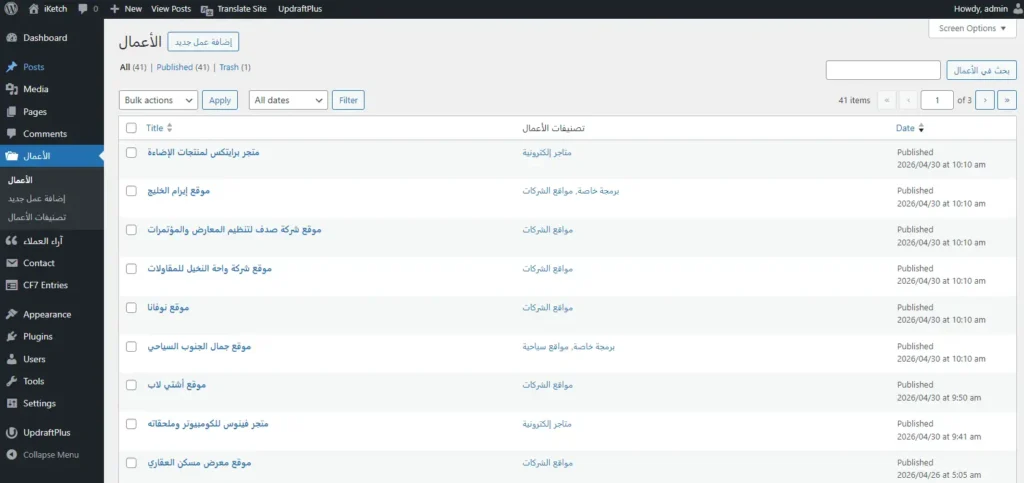
- Portfolio management
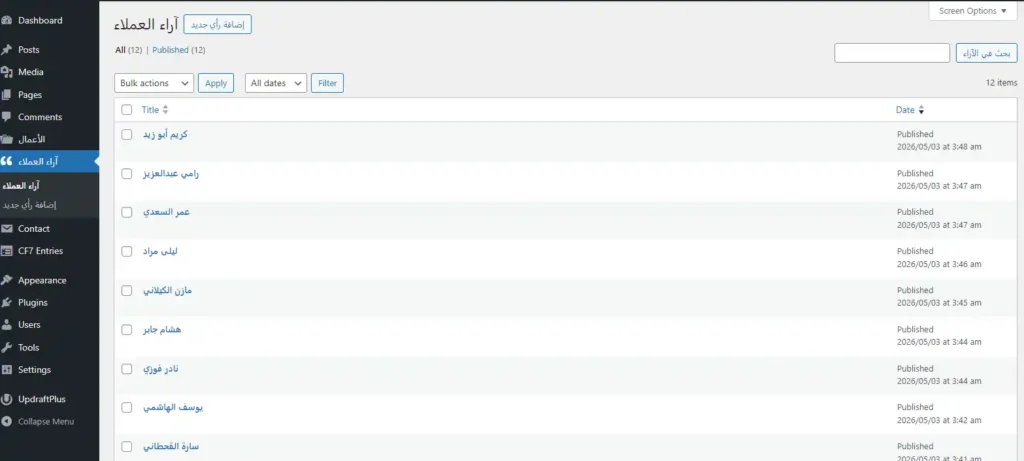
- Testimonials management
- FAQ management
- Performance-related improvements
- Theme-level settings instead of separate plugins for each detail
This does not mean eliminating plugins completely. It means using them intentionally. A plugin should exist because it adds real value, not because it is the quickest answer to every detail.
The third challenge: custom design without sacrificing easy management
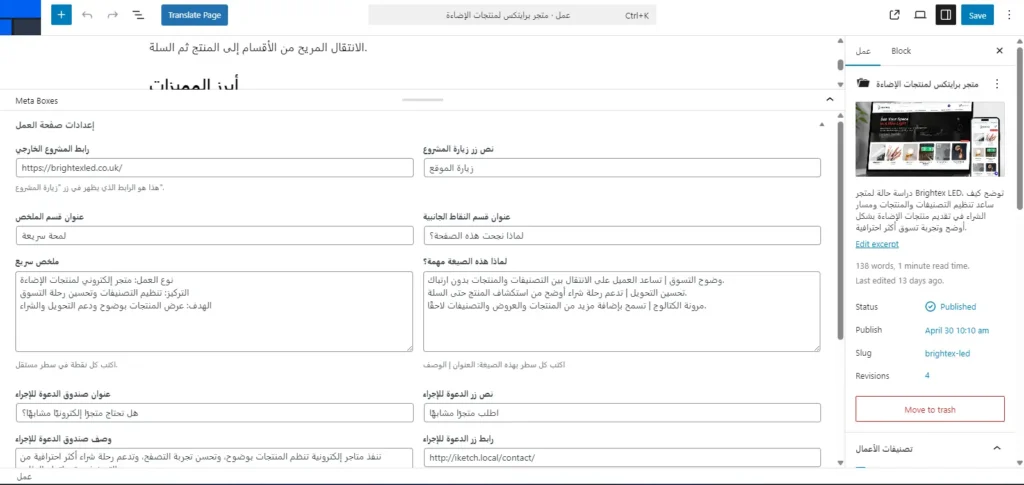
One common mistake in custom websites is building a strong design that becomes difficult for the website owner to manage later. That is not a good solution. A custom website should combine two things: a design tailored to the company, and easy management inside WordPress.
In the iKetch experience, the goal was for the important sections to remain manageable without touching code. The team needs to add an article, update a portfolio item, add a testimonial, edit a FAQ entry, or update a service page. All of that should happen clearly and comfortably inside WordPress.
The real strength is not building a fixed shape. The real strength is building a system that can be managed and developed over time.
The fourth challenge: Arabic support and mobile experience
Many ready-made themes support RTL technically, but technical RTL support does not automatically mean an excellent Arabic experience. Arabic needs special attention to spacing, sizing, element order, and reading rhythm, especially on mobile.
On the iKetch website, Arabic was treated as a primary design language, not as a translated copy of an English design. That makes a real difference, because Arabic-speaking users do not interact with a page in the same way if it is simply mirrored from left to right.
The page needs the right visual rhythm, clear headings, short paragraphs, visible buttons, and a sequence that guides the user from understanding to contact.
The fifth challenge: technical SEO built into the site structure
SEO does not start after the website is published. It starts with how the website is built. A ready-made theme may need many plugins to control titles, descriptions, sitemaps, structured data, and indexing behavior. With a custom theme, these points can be considered from the beginning.
On the iKetch website, we focused on items such as:
- A clear page structure
- Well-organized H1 and H2 headings
- Articles that are readable and indexable
- Service pages built around search intent
- Image optimization and correct sizing
- Internal links between services and articles
- Essential SEO settings built into the system
- A custom sitemap
- Reducing unnecessary files
The goal is not only to appear in Google. The goal is to appear in front of the right client, at the right time, with content that helps them make a decision.
Is a custom website more expensive than a ready-made theme?
Yes, usually it is more expensive at the beginning. But the better question is: is it really more expensive in the long run?
A ready-made theme may seem cheaper at launch, but later extra costs may appear, such as:
- Paid plugins
- Speed optimization work
- Fixing plugin conflicts
- Redesigning pages
- Customizations beyond the limits of the theme
- Complex maintenance
- Rebuilding the whole website after a short time
A custom website, on the other hand, has a clearer cost from the start if it is planned well. You are paying for a system designed around your company, not just for installing a theme and changing colors.
That is why you should not compare price alone. Compare value. What are you getting? How long will the website last before it needs rebuilding? Will it support your team? Will it persuade your clients? Will it support your marketing and SEO strategy? Will it reflect the real level of your company?
Does every company need a custom WordPress website?
No. Not every project needs a custom build. If your company is just starting and you need a quick website with a limited budget, a ready-made theme may be appropriate. If the project is very simple and does not need a strong identity or expansion soon, a custom build may not be necessary yet.
But if the website is part of the sales process, a tool to persuade B2B clients, or the public face of a professional service company, then a custom website becomes a stronger choice. Especially if you want a website that does not look like the competition, performs well, is easy to manage, scalable, and built around your goals rather than the limits of a generic theme.
How do you know your current website needs rebuilding?
You do not need to rebuild a website just because it is old. But there are clear signs that it may need deeper reconsideration:
- The website is slow on mobile
- The design no longer reflects your current company level
- Editing pages has become difficult
- The website depends on too many plugins
- Problems keep appearing after updates
- Service pages are not persuasive enough
- The website does not support your SEO plan
- User experience is weak
- The website looks too similar to many competitors
- Your team cannot manage content easily
If you see more than one of these signs, the issue is probably not a small adjustment. It may require a deeper rebuild or restructuring.
Why did we choose WordPress even with a custom theme?
Some people associate customization only with full custom programming, but that is not always true. You can have a powerful, custom website using WordPress when it is built correctly.
WordPress gives you a strong content management system, while the custom theme gives you freedom in design, performance, and content presentation. This combination is highly suitable for many companies, especially companies that need:
- Easy management of articles and services
- Better visibility in search engines
- The ability to add pages without complexity
- A reasonable development cost
- A website that can grow with the business
In other words, you do not have to choose between a limited ready-made theme and a fully custom-coded system with a much higher cost. You can choose a strong middle path: a custom WordPress website built around your company’s needs.
What makes a custom WordPress website successful?
The success of a custom website does not come from the word “custom” alone. It comes from how it is built. A successful custom WordPress website should include:
- A design built around the company identity
- A clear user experience
- Strong loading speed
- An easy admin experience
- A well-structured page system
- Clean code
- Limited plugin reliance
- Scalability
- Good SEO support
- A clear maintenance plan
Without these elements, a custom website can turn into a complicated project without real benefit. The key is not simply to build something custom. The key is to build it correctly.
Final takeaway: ready-made theme or custom WordPress website?
A ready-made theme is suitable when you need a simple website quickly and with a limited budget. A custom WordPress website is more suitable when you need a website that represents your company seriously, supports marketing, improves SEO, and gives you better performance and control.
The choice should not be based on trends, and not on the idea that one solution is always better than the other. The choice depends on your company stage, website goals, content needs, and how the website is used to attract clients.
In the iKetch experience, we chose to build a custom WordPress theme because the website itself is part of proving the quality of our service. We did not want a website that merely looks good. We needed a website that is fast, clear, manageable, and built around how we work. That is the real difference between installing a ready-made theme and building a website that genuinely serves your company.
Do you need a custom WordPress website for your company?
If your current company website does not reflect your level of work, feels slow, is difficult to manage, or was built on a ready-made theme that no longer fits your current stage, it may be time to build something stronger.
At iKetch, we help companies build custom WordPress websites with professional design, strong performance, and an easy management experience. We start by understanding your business, audience, and goals, then build a website that fits your identity, scales with your growth, and is prepared for search visibility.
Do You Need a Custom WordPress Website That Truly Fits Your Business?
If you want a website that is faster, clearer, and easier to manage than most ready-made themes, we can help you build a custom website that supports your business goals and reflects the real level of your brand.