
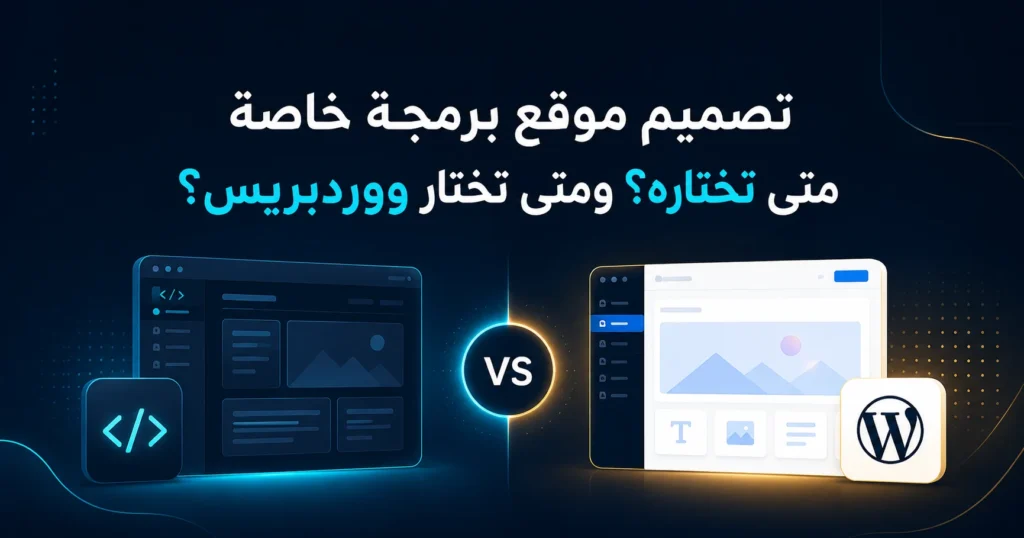
Custom Website Development: When Should You Choose It and When Should You Choose WordPress?
Choosing the right solution starts with understanding the project itself
Choosing how to build your website is not only a technical decision. It affects cost, delivery time, ease of management, development speed, maintenance, security, and the customer experience after launch.
Many business owners begin with the familiar question: should I choose WordPress or custom development?
But the more accurate question is this: what kind of project are you building, what does it truly need right now, and what is it likely to need one or two years from now?
Custom development is not always the better choice. WordPress is not always a simplistic or limited one. A successful website depends less on the name of the technology and more on planning quality, design quality, clean implementation, easy administration, and a realistic growth plan after launch.
What does custom website development mean?
Custom website development means building the website or system around the real needs of the project instead of depending on a ready-made theme or a generic solution with light edits.
In this model, the interface, admin area, database structure, permissions, and system integrations are shaped around the business itself. That means the result may be more than an informational website. It may become a digital system that manages part of the company’s operations.
A simple example: if a company needs a client portal where each customer can log in and review files, invoices, requests, documents, and service status, the project is no longer just a brochure website. It becomes a system with custom business logic.
In that case, custom development can be a very logical choice.
What does a custom WordPress website mean?
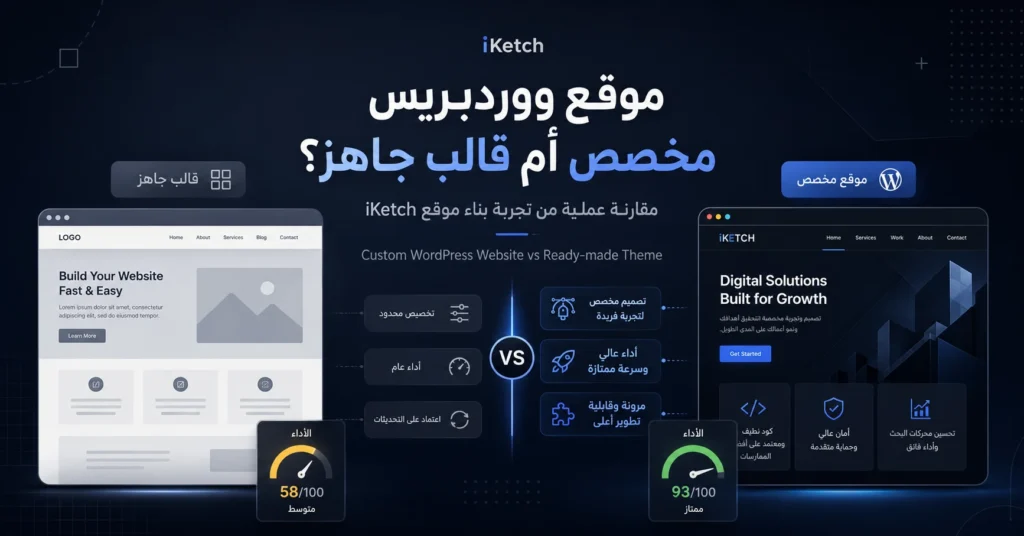
WordPress does not automatically mean a ready-made template. Many business owners associate WordPress with heavy themes and repetitive websites, but the problem is often not WordPress itself. The problem is how the site is built.
A WordPress website can be custom-built in design, theme architecture, page structure, loading speed, user experience, and SEO. In that case, WordPress is not “just a theme.” It becomes a powerful content management system behind a website designed specifically for the company.
This path works very well for company websites, service websites, professional blogs, landing pages, portfolios, and small to medium online stores that need easy day-to-day content management.
https://iketch.com/wp-content/uploads/2026/05/custom-website-development-vs-wordpress-infographic-1.webp
The real difference is not that custom development is “professional” and WordPress is “simple.” That is an incomplete way to look at it.
The difference is in the nature of the project and how the website will be used.
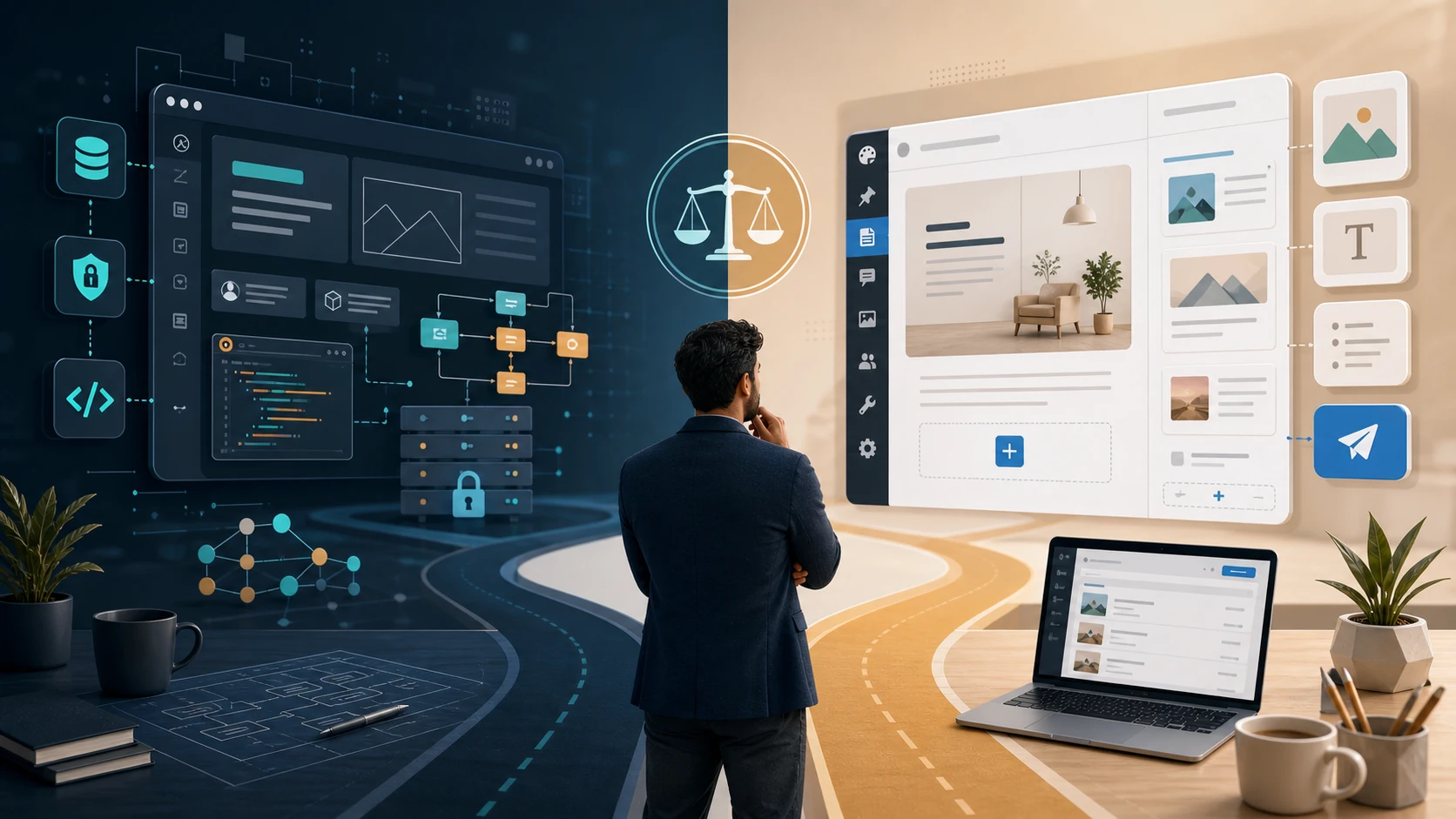
WordPress is a strong fit when the project revolves around pages, content, services, articles, products, and easy site management. Custom development becomes more appropriate when the project revolves around unique workflows, internal operations, advanced permissions, or a user experience that does not fit cleanly inside a ready-made CMS structure.
Put more simply: if you need a website that presents your company, explains services, and attracts leads, custom WordPress is often an excellent option. If you need a system that manages operations or a platform with its own rules, custom development may be the stronger path.
Comparison table: custom development vs. custom WordPress
| Comparison area | Custom development | Custom WordPress |
|---|---|---|
| Cost | Usually higher because the project is built around custom requirements from the start. | Usually lower because it benefits from a ready content management foundation with custom implementation. |
| Delivery time | Often longer because of discovery, development, testing, and custom admin work. | Usually faster for business websites, content-driven websites, and medium stores. |
| Daily management | Needs a custom admin experience for each part you want to manage. | Easier for pages, posts, images, services, FAQs, and products. |
| Maintenance | Needs a team that understands the custom codebase and system architecture. | Easier when the website is built on a clean theme with limited, controlled plugins. |
| Scalability | Stronger for complex products, internal systems, and projects with custom logic. | Strong for company websites, content platforms, and small to medium stores. |
| Best fit for | SaaS platforms, client portals, internal systems, and advanced permission structures. | Company websites, service websites, blogs, landing pages, and many business-led digital experiences. |
When is custom development the better choice?
Choose custom development when your project is bigger than a standard website.
It is often the better fit for SaaS products, client portals, booking and subscription systems, internal dashboards, order or employee management systems, and projects that need custom integration with external systems.
A practical example: if a law firm needs a system that manages clients, cases, hearings, documents, payments, tasks, and staff permissions, that is not a normal website. It is an internal operating system or a SaaS-style product. In that case, custom development is usually a better choice than trying to force everything through many WordPress plugins.
When is WordPress the smarter choice?
WordPress can be a practical choice when you need a manageable website within a sensible budget and a clearly defined scope.
It is especially suitable when the project needs service pages, SEO articles, a portfolio, testimonials, contact forms, landing pages, or a medium-sized online store.
For example, if an interior design company needs a website to present services, past work, articles, reviews, and a clear contact path, custom development may be unnecessary overhead. A custom WordPress website with a clean, lightweight theme can deliver an excellent result in less time and with a more practical budget.
Does WordPress mean a generic theme?
No.
WordPress is a content management system. A ready-made theme is only one way to use it, and not always the best one.
There are usually three broad ways businesses use WordPress: a ready-made theme with light edits, a ready-made theme with many plugins, or a fully custom theme built for the company.
The difference between these approaches is huge. A WordPress website built on a heavy theme with too many plugins may become slow and difficult to maintain. A WordPress website built on a clean custom theme can be fast, organized, easy to manage, and much better for growth.
Common mistakes when people ask for custom development
The first mistake is choosing custom development only because it sounds stronger. Some companies assume custom development always means better quality, but that is not true.
If the project does not genuinely need custom development, you may pay more, wait longer, and carry higher maintenance cost without real business value.
Other common mistakes include starting without a clear discovery phase, trying to build everything at once, neglecting user experience, or launching without a realistic support plan.
Performance, maintenance, and long-term fit
Speed does not depend only on the technology choice. You can build a very fast WordPress website, and you can also build a very slow custom website. The real factor is implementation quality.
WordPress maintenance usually revolves around updates, backups, plugin review, and security monitoring. Custom development maintenance usually revolves around code updates, dependencies, bug fixes, and structured technical ownership.
Neither path is maintenance-free. The better question is whether the maintenance model matches your team and business reality.
Content management and day-to-day updates
This is one of the biggest reasons WordPress wins in many projects. If your team needs to update pages, articles, services, images, products, or FAQs regularly, WordPress is usually the more practical choice.
In a custom-built system, every manageable area must be designed and built intentionally. That can be excellent when the project truly needs it, but it also increases time and cost.
Scalability in the future
Scalability does not automatically mean custom development. A scalable website is one that was structured properly from the beginning.
WordPress can scale very well for company websites, mid-sized stores, and content-heavy websites. But if future growth includes complex logic, many integrations, advanced permissions, or internal operations, custom development becomes more reasonable.
Practical examples for choosing the right path
- If you run a service company and want a website that presents services and attracts leads, custom WordPress is often a strong fit.
- If you run a standard or mid-sized online store, WordPress with WooCommerce may be enough.
- If you are building a subscription platform with custom roles and a unique product flow, custom development is often better.
- If you need an internal system for staff and clients, custom development is usually more suitable.
How does iKetch help you choose the right solution?
At iKetch, we do not start from the technology. We start from the project itself.
We review the business type, website goals, user types, content management needs, budget, timeline, and future development plans. Then we determine whether the right path is a custom WordPress website, an eCommerce store, a fast SEO-focused website, a custom admin experience, or a fully custom system.
The goal is not to sell the most expensive solution. The goal is to recommend the solution that genuinely serves the project.
Frequently asked questions
Is custom development always better than WordPress?
No. Custom development is better when the project includes custom logic, internal systems, or advanced permissions. WordPress is often better for company websites, services, content, and many medium eCommerce cases when it is implemented professionally.
Can a WordPress website have a fully custom design?
Yes. A custom WordPress theme can be built specifically for the company, and that is very different from using a generic ready-made theme.
Can I start with WordPress and move to custom development later?
Yes. For some businesses, that is a smart path. You can start with a strong WordPress website to prove the idea and attract clients, then build a custom system later when the real need becomes clearer.
Start your project with the right foundation
Choosing how to build your website should never be random.
Do not choose custom development only because it sounds stronger. Do not choose WordPress only because it seems faster or cheaper. Choose the path that matches your project type, budget, management model, and growth plan.
Compare the available implementation paths within our website design and development service before requesting a project quote.
Need help choosing between WordPress and custom development?
Let’s review your project goals, content workflow, budget, and growth plan together, then recommend whether a custom WordPress site or a fully custom build is the smarter next step.