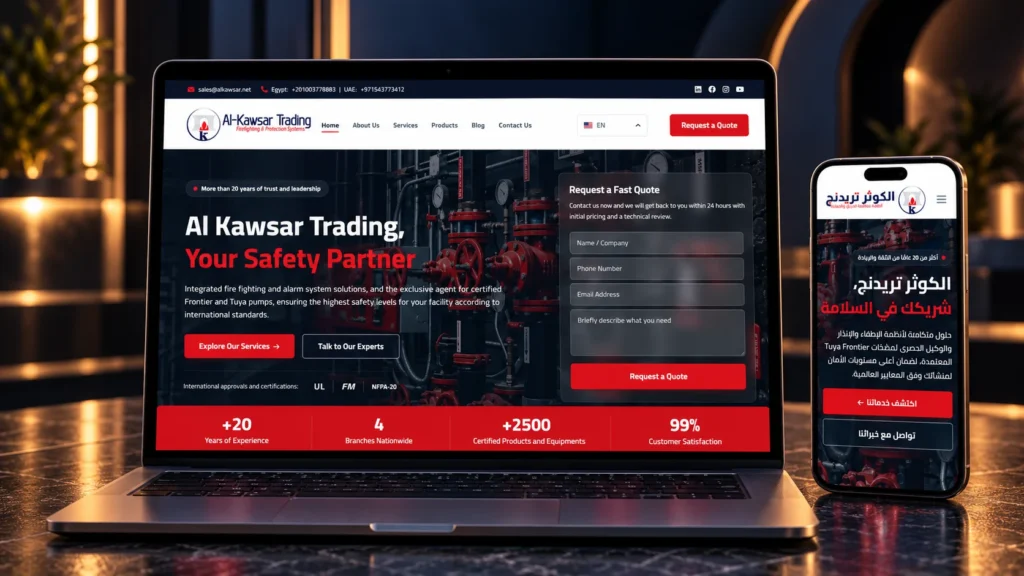


When you start looking for a web design company, many proposals sound alike: professional design, a fast website, technical support, and search engine optimization. Those promises alone do not explain what you will receive or how your team will use the website after launch.
Choosing the right company becomes easier when you ask for specifics: How will your services be presented? What does a customer need to request a quote? Who will prepare the content and manage the website? This guide covers eight criteria for evaluating companies, followed by a checklist you can use to compare proposals.
1. Describe your project before requesting quotes
It is difficult to compare two proposals if each company has a different project in mind. Write a short brief and send it to the companies you are considering. You do not need a long technical document; one clear page is enough to start a useful conversation.
- Your business and audience: What service do you provide, and who is it for?
- The website’s purpose: Quote requests, appointment bookings, product sales, or showcasing projects?
- Essential pages: For example, home, services, portfolio, about, and contact.
- Languages and content: Do you need Arabic and English? Are the text and images ready?
- Required features: An enquiry form, file uploads, payments, or integration with another system.
- Launch date and approximate budget: These help the company suggest a realistic scope.
For example, “I need a supplier website that displays products and lets customers request a quote” describes a different project from an online store that handles payments and shipping. Explaining this difference early helps you choose the right website design and development service and reduces revisions caused by misunderstandings.
2. Review the portfolio by using the websites
Portfolio images give you an impression of the design, but using the website reveals more. Open two or three projects on your phone, look for a service or product, and try to find a way to contact the business. Can you understand what the company does? Can you find what you need easily?
Ask the design team to explain its role in each project. Did it design and develop the whole website, customize a theme, or deliver a specific part? Ask about one decision made during the project and why it was chosen. An explanation tied to a client’s needs tells you more than a list of technologies.
A project in your industry can be useful, but relevant experience may also come from another industry with similar requirements. A supplier might need a catalogue and a quote request form, while a service business needs to explain its specialties and demonstrate experience. Look for similarities in the problem the team solved.
You can use the iKetch portfolio as a starting point. When reviewing a published website, remember that its content, hosting, and configuration may have changed since handover. Discuss your observations with the team before judging its work.
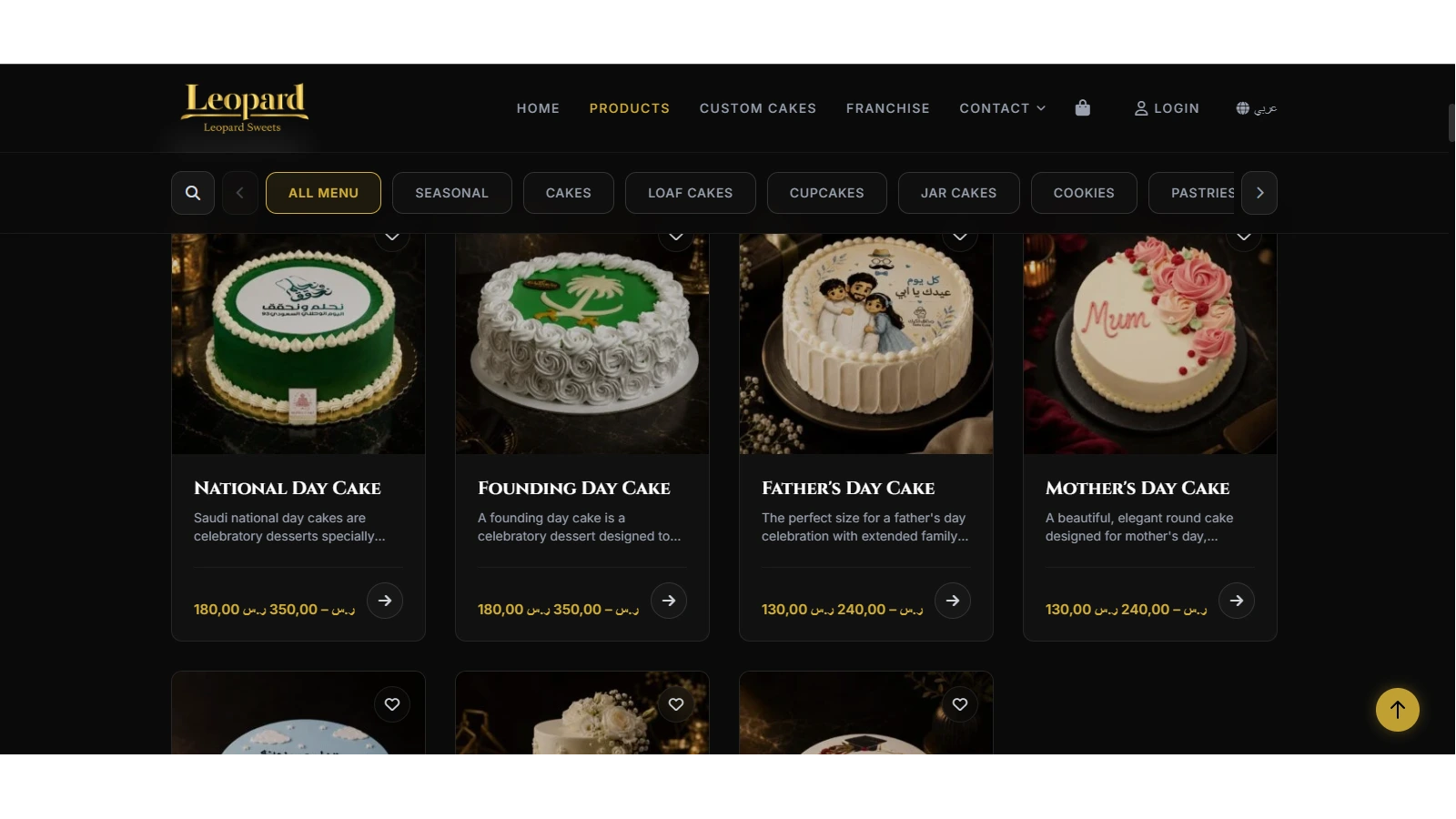
A practical example: what should you check in Leopard Sweet? Look beyond the colors and follow the customer’s path: choose a sweets category, compare products, and open a product’s details. Ask for the store link and try changing categories, opening a product, and understanding any price differences, especially on mobile. These steps help you assess the actual shopping experience. Explore the Leopard Sweet project.
3. Pay attention to the questions the company asks you
An introductory call reveals a lot about how a company works. A team that wants to understand the project will ask how enquiries reach you now, what your customers ask about, who will update the content, and what you expect the website to achieve in the coming months.
Ask for an initial outline of the pages and visitor journey, even if it is only a written explanation. For example, a visitor lands on a service page, reviews a similar project, and sends an enquiry with the information your sales team needs. This connects the design to a goal you can discuss and review.
When the company recommends a technology, ask how it serves your requirements. A ready-made theme may suit a clearly defined project with a limited budget. Custom development may fit features or designs that the ready-made option cannot accommodate. Read our comparison of custom WordPress websites and ready-made themes to understand what to clarify in the proposal.
4. Compare the scope of each quote, item by item
“A ten-page website” can mean different things. A quote might cover one repeated layout or different templates for services, projects, and articles. It might include content entry and a review of the English version, or leave those tasks to your team.
Ask the proposal to specify:
- The pages, page types, and functions required on each.
- The design and development approach, including what can be customized.
- Who writes, translates, prepares, and enters the text and images.
- Languages, contact forms, and any third-party integrations.
- Review and approval stages, and how changes to the scope are handled.
- Testing, training, support, and any recurring costs.
A hypothetical comparison: You receive two proposals for an Arabic and English website. The first covers page implementation; the second also includes content entry and training after handover. Before comparing the totals, request prices for the missing items or estimate the time your team would need to complete them. You can then compare what you will actually pay and receive.
For more detail, read our guide to company website costs and what a quote should include.
5. Ask for a content management demonstration
Think about a normal working day after handover: you want to add a service, change a phone number, or publish a new project. Ask the company to demonstrate these tasks in the admin area using a page similar to one your team will manage.
Find out which changes you can make yourself and which require a developer. Ask what training or instructions you will receive. A suitable content management setup lets your team handle routine updates while keeping the design consistent.
If more than one person will work on the website, discuss permissions too. An article editor does not necessarily need the same access as the person responsible for settings and accounts.
6. Clarify ownership, accounts, and licenses
Check whose accounts hold the domain registration and hosting, and who controls renewals and billing. Agree on the permissions, files, and access details you will receive at handover, and how website management can be transferred in the future.
Distinguish work developed specifically for your project from third-party tools. Themes, plugins, fonts, and images may have separate terms or subscriptions. Ask whether the licenses belong to your account, what needs renewing, and how an expired subscription would affect the website.
These details help you understand operating costs and your ability to manage the project later. They also prevent surprises such as discovering that a feature requires a subscription that was not clear in the proposal.
7. Agree on delivery stages and communication
Ask for stages you can review rather than relying on a final deadline alone: structure approval, design, a staging version, final review, and launch. Identify who approves each stage on your side and who your contact is at the company.
Ask when content must be ready, how much time you have to collect feedback, and how adding a feature affects the schedule and price. Consolidating your team’s comments before sending them reduces conflicting feedback and makes approval easier.
If you are working remotely with a web design company in Egypt or Saudi Arabia, agree on communication channels and meeting times too. Access to a staging website and written decision summaries help you follow progress across different working hours.
8. Understand what support includes after launch
Discuss specific examples: a form stops sending messages, a text change is needed, a service must be added, or a new feature is requested. Ask how the company handles each case, what support covers, and what requires an additional quote.
Define the initial support period, how to report problems, and whether maintenance includes updates, backups, and regular checks. Agree on how urgent issues are handled according to your business needs. A store receiving daily orders has different priorities from an informational website that rarely changes.
A checklist for choosing a web design company
Use this checklist with every shortlisted company. Mark each item as “clear and documented,” “needs clarification,” or “not available.” Resolve unanswered points before making your decision.
- I received an explanation connecting the pages and features to the project’s goal.
- I reviewed published projects and understood the company’s role in each.
- I understand the recommended technology and level of customization.
- I received a clear scope covering content, languages, and costs.
- I saw how my team will add and edit content after handover.
- The accounts, permissions, files, and licenses I will receive are clear.
- We agreed on delivery stages, reviews, and approval responsibilities.
- I understand the support period, its scope, and any ongoing costs.
If an answer is only a general promise, request an example or a written explanation. The aim is to make a decision using information you can refer to during the project.
Frequently asked questions when comparing companies
Should I choose a company that has worked in my industry?
Industry experience helps a team understand terminology and anticipate visitors’ needs. Also review projects with similar functions and complexity, and ask how the team will learn about your business. An industry name alone does not demonstrate implementation quality.
Does a low price mean the website will be poor?
A lower price may suit a limited project that uses an appropriate ready-made solution. What matters is understanding the proposal’s limits, what you may need to add later, and who will handle content and management. Compare quotes covering similar requirements before judging the price.
Do I need a large company, or can a small team handle the project?
That depends on the scope, how the project is managed, and continuity of support. Ask who handles design, development, and review, and how work continues if a key person is unavailable. Our comparison of a web design company and a freelancer explores the options further.
Does SEO setup guarantee a number-one ranking?
Ask what SEO setup includes: heading structure, indexability, links, performance, and measurement tools. Those deliverables can be reviewed, while rankings depend on content, competition, and other factors. Google’s guidance on hiring an SEO explains that no one can guarantee a number-one ranking in search results.
Start with a brief and ask for a proposal you can evaluate
Gather your essential requirements, choose a small number of companies to speak with, and review their proposals against the criteria above. Choose a team whose scope you can understand, whose progress you can follow, and whose deliverables you can assess.
If you are considering iKetch as your web design company, tell us about your business, your audience, the essential pages and features, and examples that show your preferred direction. Discuss your project and request a quote to define the scope, cost, and next steps.